
Packaging concepts, with pixel proof of what changed
Spice brand
For a spice brand, we produced packaging concepts across variants and positioning tiers, with every edit proven rather than asserted. A pixel comparison against the original shows zero changed pixels outside the authorised label area, and a generated pouch outline that failed the standard was rejected in favour of a controlled interior retouch.
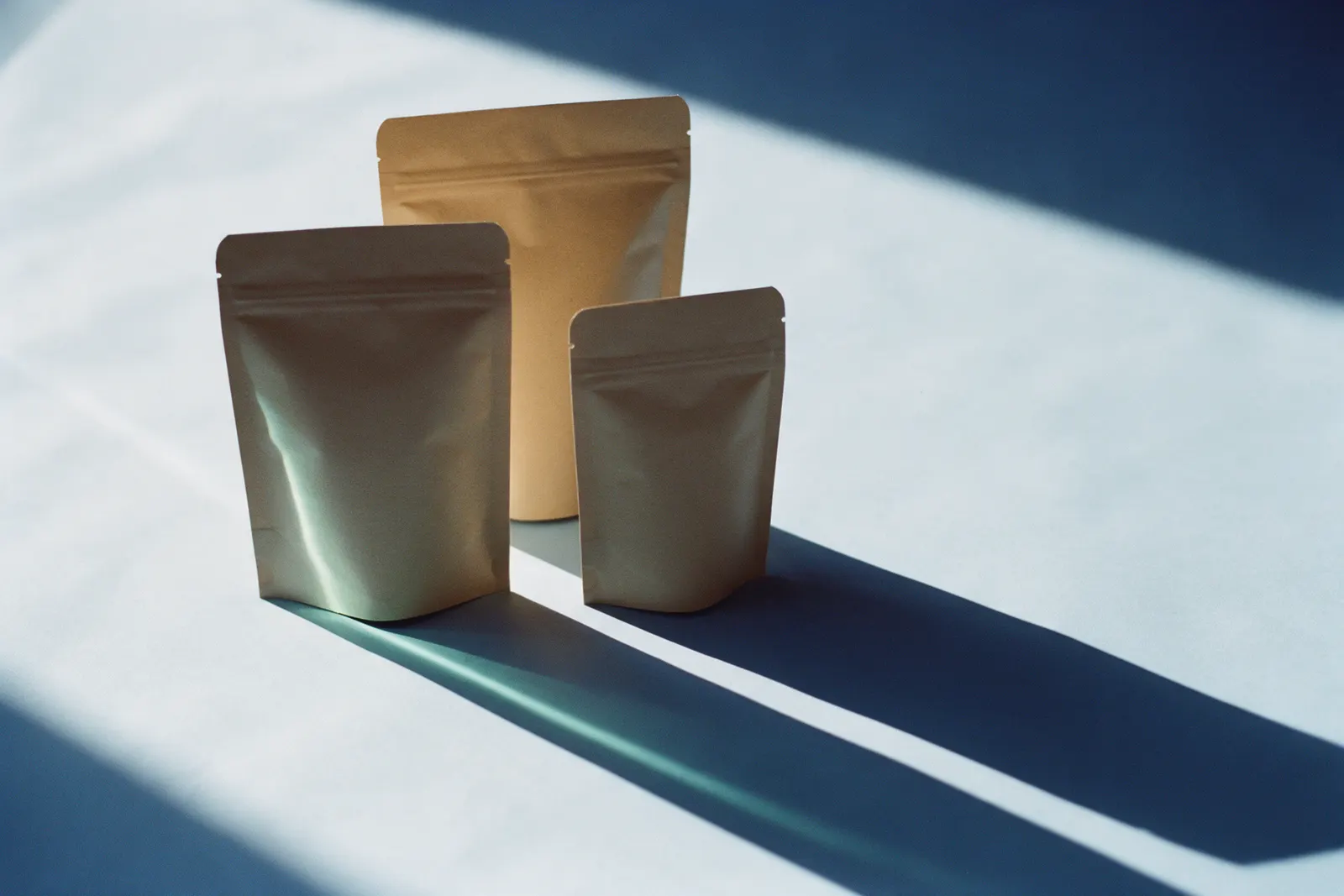
- changed pixels outside the authorised area
- zero
- generated outputs rejected
- the pouch outline
- evidence per edit
- pixel comparison
- rendered pages verified
- 3
- 01
Produced concepts across product variants and positioning tiers
- 02
Compared every edit against the original, pixel by pixel
- 03
Documented the rejected generation alongside the accepted one
- 04
Placed badges and the registered mark as real text in a...
Every edit comes with proof. A pixel comparison confirms zero changed pixels outside the authorised label regions, and when the generated pouch outline failed that standard it was rejected, so the standard holds.
The challenge
Generated edits to approved packaging artwork can alter details nobody notices, a logo, a seal, a benefit line, and nobody can prove otherwise afterwards.
Why it mattered
Approved packaging carries brand detail that has to stay exact. A brand cannot put AI edited artwork in front of buyers without knowing precisely what the AI touched.
What we built
- Produced concepts across product variants and positioning tiers.
- Compared every edit against the original, pixel by pixel.
- Documented the rejected generation alongside the accepted one.
- Placed badges and the registered mark as real text in a controlled layout, using image generation only for an interior retouch.
The result
- Share ready packaging options as a combined PDF, individual images and a sharing pack.
- Proof of zero changed pixels outside the authorised label areas on all three rendered pages.
- Original outlines, seals, illustrations, benefits and footer kept exactly as approved.
Built for trust
Every edit comes with proof. A pixel comparison confirms zero changed pixels outside the authorised label regions, and when the generated pouch outline failed that standard it was rejected, so the standard holds.
AI at work
AI image generation takes the fiddly retouch work on approved packaging, clearing old print from label areas, while a pixel check proves nothing changed outside the area the brand authorised. People decide which concepts go forward and reject any generation that fails the check.
What it produces
- packaging concepts across variants and tiers
- AI retouched label areas
- a pixel comparison for every edit
- share ready PDFs, images and a sharing pack
How it works, day to day
Approved artwork goes in, AI works only on a defined interior area, and badges and marks are placed as real text. Each result is compared pixel by pixel with the original, and any change outside the authorised area is rejected.
Where it saves time, and gets better with use
- New variants and tiers start from the approved artwork, so each concept round reuses the brand's existing assets rather than redrawing them.
- The pixel check is the same for every edit, so the standard holds on every concept, not just the first.
- Failures are caught and rejected before a buyer sees them, as the generated pouch outline was.
The technology
- Concepts across variants and tiers
- Proof of exactly what changed
- Work that failed the standard was thrown away
Technical notes
- Baseline capture before edit, pixel difference after, bounded to the authorised regions
- Generation restricted to a defined interior area, with structural artwork out of scope
Questions we get asked
- How do you prove an AI edit did not change anything else?
- Render the edited artwork and the original at the same size and position, then compare them pixel by pixel. Here every page showed zero changed pixels outside the authorised label areas.
- What happens when a generation fails the standard?
- It is rejected. The generated pouch outline failed, so only the interior retouch was used and the original outline was kept.
Related systems
A print pipeline that checks its own pages
Oral-care brand
Print errors caught on screen, before they reach the printer.
54slides processed
Built and run in one evening
A content engine that produces festival campaigns two weeks ahead
Spice brand
Festival campaigns planned a year ahead and produced two weeks early.
4reusable master templates
Set up and first batch drafted in one afternoon
A library that answers questions and always shows its source
Specialist education institute
Answers from approved documents only, each with the page it came from.
65 out of 100minimum match before answering
Live in two weeks